Staff and Postdoctoral Fellows
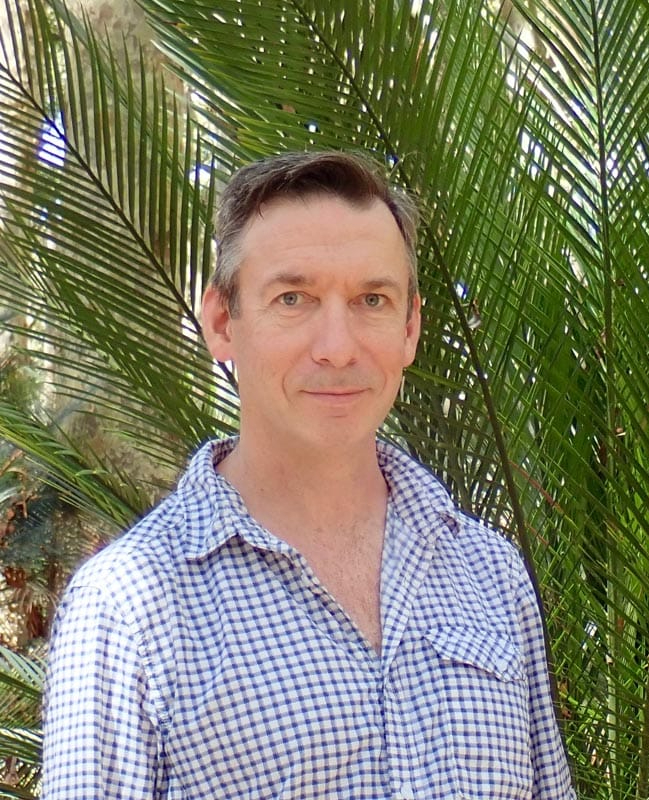
Prof. James Cook is a Professor in the Hawkesbury Institute for the Environment at Western Sydney University, where he leads the Pollinator Lab, as well as the wider Plants, Animals and Interactions Research Theme.
James has strong interests in ecology, entomology, behavior, evolution and conservation, and his research focuses on insects and their interactions with plants and microbes. He has published in many leading science journals, such as Ecology Letters, Current Biology, Evolution, Proceedings of the Royal Society B, Journal of Animal Ecology, Molecular Ecology etc., as well as review papers and commentaries in Trends in Ecology & Evolution. His publications are listed here.
In his spare time James is a keen bushwalker and nature photographer, activities that benefit from living in the beautiful Blue Mountains near Sydney!

Dr. Amy-Marie Gilpin is an ecologist specialising in plant-pollination ecology. Amy researches the ecology of pollinators and the pollination function that they provide within native and agricultural ecosystems. Her current work focuses on the interactions between introduced honeybees (Apis mellifera) and native pollinators, and understanding the effect of disturbance, particularly fire, on flowering dynamics and pollinator networks.
Amy’s research is highly collaborative working with entomology experts within the Pollination Lab at HIE, as well as experts from the School of Business, Education and Government. For research opportunities or more information please see the lab website or her list of publications.
Dr. Simon Tierney is an expert on bee ecology and behaviour. He is using ecological and molecular approaches to study native pollinator communities in orchards and surrounding bushland areas.
Using field and genetic tool-kits he aims to understand the interplay between whole organisms, their environment and their genes, with a particular focus on social insect organisation, photic niche shifts and pollination. He has undertaken extensive fieldwork throughout Australia, the Americas, Africa and Asia, and is currently involved in a multi-disciplinary project aimed at understanding and safeguarding the pollination services provided by Australian bees.
Dr. James Makinson is a behavioural ecologist interested in the foraging and communication behaviour of social Hymenoptera such as honey bees, bumblebees and stingless bees. His area of focus is the foraging behaviour of stingless bees on tropical crops such as macadamia, avocado, lychee and mango. James is particularly interested in monitoring this behaviour using telemetry and hive monitoring technology.
He has also undertaken research using harmonic radar technology to track the flight paths of honey bees and bumblebees, and decoding the waggle dance communication system to understand how relocating honey bee swarms co-ordinate group departure.

Dr. Claire Allison is a post doctorate who completed her PhD on the management of stingless bees as pollinators in tropical agricultural crops. After keeping honeybees for several years and working with bumblebees and other wild pollinators throughout her undergraduate and master’s degrees in the UK, she to Australia to work with stingless bees. Her key research is looking at hive deployment, as well as better understanding the health and microbiomes of stingless bee species during crop pollination.
PhD and Masters Students

Guarav Singh has an honours degree in agricultural sciences and a masters in agricultural entomology. His PhD thesis is focusing on understanding mango pollination in the NT, specifically foraging behaviour and pollination efficiency of mango pollinators and spatio-temporal variations in mango pollinator assemblages. He is also working on the harmful effects of pesticides on Australian stingless bees’ behaviour and health.
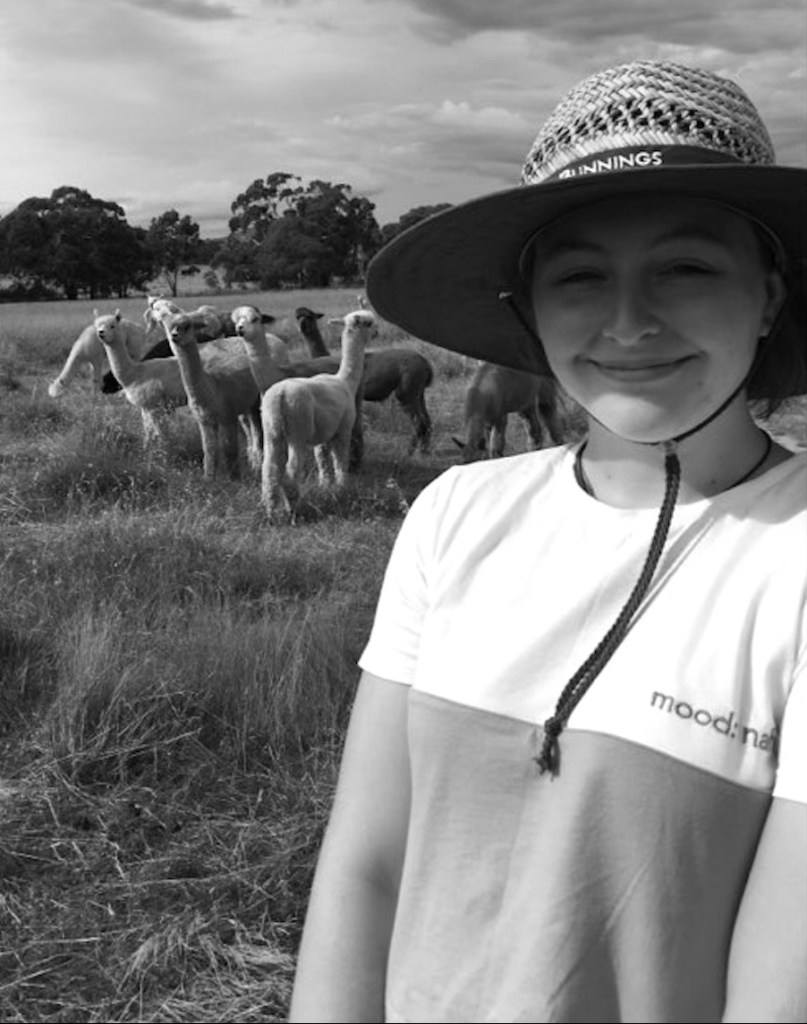
Rose Harper is a Master of Research Student who is interested in studying pollinator-pollinator interactions, with a focus on how introduced pollinators impact native bee populations. Rose hopes to learn about these interactions and contribute to the growing knowledge on exotic and native pollinators. Rose is also currently working as a research assistant at the Pastures And Climate Extremes experiment, gaining knowledge and experience on experimental design and data collection methods.
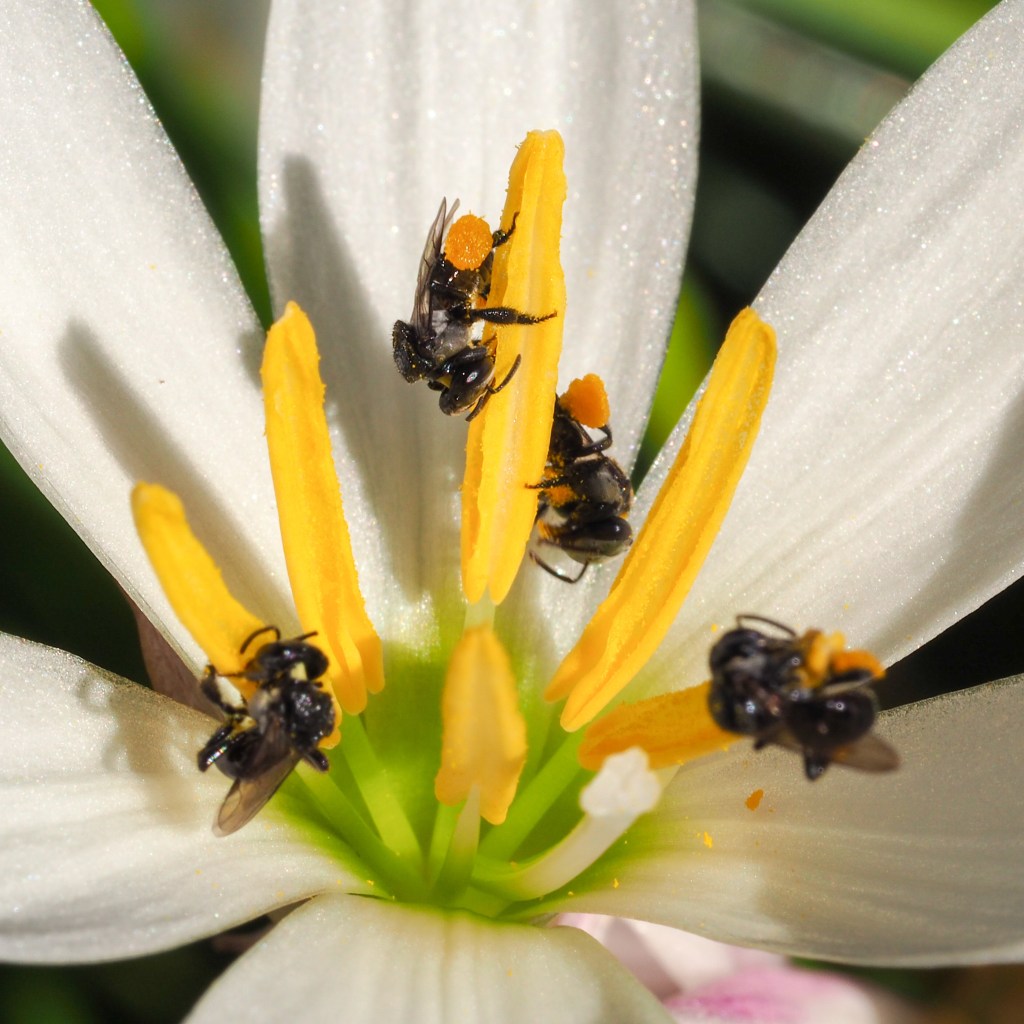
Andrew Anoochah Williamson is a HIE Post-graduate completing a Master of Research. He is interested in how bushfires impact the flowering of native Australian flora and the impact to pollinator communities. For his master’s thesis Andrew is investigating the effect of fire intensity and frequency have on the flowering of Corymbia maculata and what are the consequences to pollinator communities in South-Eastern NSW.
Former Lab Members
Guarav Singh (PhD) has an honours degree in agricultural sciences and a masters in agricultural entomology. His PhD thesis focused on understanding mango pollination in the NT, specifically foraging behaviour and pollination efficiency of mango pollinators and spatio-temporal variations in mango pollinator assemblages. He is working on the harmful effects of pesticides on Australian stingless bees’ behaviour and health.
Jon Finch (PhD) studied the pollination mutualism between the shrub Breynia oblongifolia and Epicephala moths. He explored the costs and benefits of moths for the plant, and the distribution and interactions of the two pollinator species.
Onyeka Nzie (PhD) completed his PhD in pollination for protected cropping agriculture. His research is looking at the implementation of Australian stingless bee species as managed pollinators within protected cropping environments, specifically for strawberry crops.
Bronwen Roy (PhD) studied microbial diseases of Australian native bees, especially “sugarbag” stingless bees. She investigated a novel bacterial brood disease, as well as bee viruses.
Olivia Bernauer (PhD) studied the ecology and behaviour of reed bees and the role of native bees in the pollination of orchard fruits. Click for her bio / CV.
Alex Robertson (MRes) studied seasonal and altitudinal variation in hoverfly communities in the Blue Mountains.
Lisa Vella (MRes) studied pollinator communities in orchard fruit crops, focusing on temporal partitioning of pollinator species.
Laura Brettell (Post-Doc) is an expert on the ecology and evolution of pollinator viruses. She focused on communities of native bees and other pollinators, characterizing their viral infections and other key pathogens.
Caroline Fromont (PhD 2017) did her PhD on the biology of psyllid insects, which cause periodic major outbreaks. She studied their diversity, microbial symbionts, and parasitic wasp enemies. She is now pursuing her interests in insect/microbe interactions as a Postdoctoral Research Fellow in the USA (Cornell University).
Tim Sutton (PhD 2016) conducted his PhD research on the population genetics and phylogeography of cryptic fig-pollinating wasp species, and the impact of climate extremes on pollinator behavior and longevity. Tim now works for the NSW Office of Environment and Heritage in the Species Conservation Team.
Aidan Hall (PhD 2016) did his PhD on the biology of psyllid insects of Eucalyptus trees. He studied the population dynamics of a major psyllid outbreak, as well as psyllid diversity, microbial symbionts and parasitic wasp enemies. Aidan now works on insect biosecurity for the NSW Office of Environment and Heritage.
Jane Degabriel (Postdoc 2012-2016) is an ecologist interested in animal-plant interactions, conserving threatened species, and communicating about science. She worked with us on the ecology of figs and fig wasps and now leads a species conservation policy team at the NSW Office of Environment and Heritage.
Clive Darwell (PhD 2013) conducted his PhD research on geographic patterns in fig-pollinator-parasitoid interactions. Clive is now a Postdoctoral Research Fellow in insect phylogenomics at the Okinawa Institute of Advanced Science, Japan.
Heather Campbell (PhD 2013) did her PhD on interactions between African Acacia trees and thorn-nesting ants in Namibia. She then continued studies of ant communities first in Australia and then as a Postdoctoral Research Fellow in South Africa.
Ian Townsend (PhD 2013) conducted field and modelling studies for his PhD on interactions between oak trees (Quercus) and three species of invasive acorn-galling wasps in the UK. Ian is now working in computing.
Derek Dunn (Postdoc 2006-2012) is interested in cooperative interactions in ecosystems, either between individuals of the same or of different species. His studies include conflicts in the symbiosis between fig trees and their pollinating wasps. Derek is a researcher at Northwest University in China.
Sarah al Beidh (PhD 2011) conducted her PhD research on figs and fig wasps, focussing on differences between co-pollinators of the same fig, attack by parasitic wasps, and the impact of ants. She then joined the Royal Horticultural Society as a Knowledge Exchange Fellow focusing on garden plantings to support insect biodiversity.
Simon Segar (PhD 2011) studied fig wasp communities for his PhD, focusing on the global phylogeny and host specificity of parasitic wasps; and the comparative structure of fig wasp communities across continents. He is now a Postdoctoral Research Fellow at the Czech Academy of Sciences, studying plant/herbivore interactions along altitudinal gradients in Papua New Guinea.
Ana Delgado (PhD 2009) did her PhD on the genetic and phenotypic effects of Wolbachia bacteria on the biology of a global pest, the diamondback moth. Ana then moved to a government position analyzing medical statistics.
Tom Oliver (PhD 2008) studied symbiotic interactions between ants and aphids for his PhD. He explored issues about the conditional nature of mutualism and interactions between aphids, aphid predators and ant guards. Tom is now an Associate Professor in Landscape ecology at the University of Reading, UK.
Eleanor Haine (PhD 2005) studied Wolbachia and transposon infections in figwasp communities, and demonstrated the existence of cryptic species of fig-pollinating wasps. She then moved to France as a Postdoctoral Research Fellow to continue research on host-parasite interactions.
David Orme (PhD 2003) conducted his PhD on comparative studies of animal diversity using phylogenetic techniques. He is now is now a Lecturer at Imperial College London.
Daniel Bean (PhD 2002) did his PhD on fig wasp mating systems, focusing primarily on mate competition strategies. He then returned to his first love as a radio DJ.
Carlos Lopez-Vaamonde (PhD 2002) focused on insect/plant and host/parasitoid interactions for his PhD. He then moved to a Postdoctoral Research Fellowship studying bumblebee behavior, and is now a permanent entomology researcher with INRA in Tours, France.
 The Pollinator Lab